
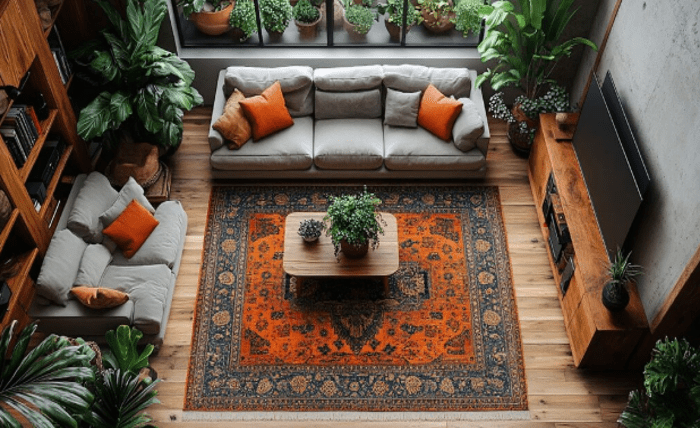
Your living room sets the mood for your entire home, and an area rug can change it more than you might think. The right rug brings warmth, comfort, and style while tying your furniture together. It can define spaces, add color, and even make a small room feel larger. But choosing and styling an area rug often feels confusing, size, color, pattern, and placement all matter.
In this blog, you’ll learn simple, practical ways to style your living room with area rugs that look good and feel right. No design stress, just smart tips that work for real homes.
Foundation First: Choosing the Right Rug Size for Living Room Spaces
Forget drooling over colors and patterns for a minute. Dimensions come first. Choosing the right rug size for living room arrangements makes the difference between wow, did you hire a designer? and what happened here?
Standard Size Guidelines by Room Dimensions
Got a compact living room around 10×12 feet? You’ll want a 5×8 or 6×9 rug. Medium-sized rooms measuring about 12×18 feet? Go with 8×10 or 9×12 dimensions. Large spaces hitting 18×20 feet or beyond need 10×14 or bigger to avoid that awkward rug island situation.
This is where quality area rugs become practical design weapons for creating zones. Try all the legs on strategy, every furniture piece sits completely on the rug, building an intimate gathering spot. The front legs only technique works wonders when you’re defining areas without swallowing smaller rooms whole. Oh, and that 18-24 inch gap between rug edges and walls? Non-negotiable. It actually expands how large your room appears.
Common Sizing Mistakes That Shrink Your Space
See that miniature rug trapped under your coffee table? Visual disaster. Oversized rugs jammed against every wall? They suffocate your floor’s natural boundaries. And runner-style rugs in square rooms? They transform your cozy space into a weird hallway nobody asked for.
Now that you’ve conquered sizing, let’s dive into the exciting stuff, picking colors and patterns that showcase your style without creating a circus.
Living Room Rug Styling Tips: Mastering Color and Pattern Selection
Staring at hundreds of rug options can paralyze even decisive people. These living room rug styling tips cut through the overwhelm fast.
The 60-30-10 Color Rule for Area Rug Decor Ideas
Your rug should reflect your room’s main color (60%), work in secondary tones (30%), and pop with accent shades (10%). This creates harmony without that cookie-cutter matched-set look. Imagine soft gray walls, a navy sofa, and mustard yellow pillows, hunt for rugs with gray bases, navy designs, and hints of yellow threading through.
Pattern Mixing Mastery
Never combine busy geometric pillows with equally chaotic geometric rugs. Mix your pattern scales instead, pair large florals with tiny dotted textures, or bold stripes with understated herringbone. Three pattern scales per room hits the sweet spot. Directional patterns like arrows or stripes pull eyes across your space, while non-directional designs create a more laid-back vibe.
Color Psychology for Living Room Area Rugs
Warm terracotta and rust shades make sprawling open-plan areas feel intimate. Cool grays and blues stretch cramped spaces visually. Neutrals give you timeless flexibility, while bold jewel tones anchor your entire design with confident personality.
Color theory mastered? Great. Let’s explore how various design aesthetics approach rug selection in wildly different ways.
Style-Specific Area Rug Decor Ideas
Your unique taste should guide every choice you make. These area rug decor ideas align with today’s most popular design movements.
Modern and Contemporary Living Rooms
Abstract patterns featuring irregular shapes pair beautifully with minimalist furniture. Monochromatic palettes in charcoal, cream, or navy build sophisticated foundations. Modern design loves statement pieces, metallic threads or striking contrasts are your friends here.
Traditional and Classic Interiors
Oriental and Persian rugs stay timeless for a reason. Search for border designs, medallion centers, and luxurious burgundy, navy, or gold color stories. These rugs naturally complement formal furniture arrangements where symmetry takes center stage.
Bohemian and Eclectic Spaces
Vintage overdyed rugs in surprising color mixes scream boho charm. Moroccan diamond patterns or tribal geometrics layer wonderfully, yes, stacking multiple rugs adds extra character. Mix global influences freely. Matching is overrated.
Style-specific decisions establish your room’s personality, but smart placement determines whether your carefully chosen rug actually enhances functionality and flow.
Strategic Placement Techniques for Maximum Impact
Exact positioning separates amateur efforts from professionally designed rooms. These approaches create visual balance that just feels right, even if you can’t explain why.
Centering Methods for Different Room Layouts
Square rooms need centered rugs with balanced spacing on every side. L-shaped areas require rugs that define seating zones without bleeding into walkways. Here’s something fascinating: furniture arrangements designed to encourage interaction decreased isolation and passive behaviors among hospitalized psychiatric patients. That research proves thoughtful rug placement under conversation clusters creates welcoming home environments too.
Furniture Arrangement Optimization
Sectional sofas perform best with rugs extending 12-18 inches past the chaise on every side. Sofa-and-loveseat layouts need rugs accommodating both pieces with front legs positioned on top. Coffee tables appear most intentional sitting entirely on the rug with at least 18 inches surrounding them.
Strategic placement maximizes your rug’s impact, but achieving designer-quality results doesn’t require designer-level spending if you know where your money matters most.
Budget-Conscious Area Rug Decor Ideas
You don’t need a trust fund for gorgeous results. These area rug decor ideas deliver stunning styling without financial panic.
High-Impact, Low-Cost Styling Solutions
Quality rug pads run $30-50 but literally double your rug’s lifespan while stopping dangerous slips. Vintage and secondhand rugs from estate sales frequently surpass new synthetic options in both quality and charm. Seasonal rotations refresh your aesthetic twice yearly without purchasing multiple pricey pieces. Industry projections reveal the carpet and rug market hit roughly $50 billion in 2024-2025 and should reach $66 billion by 2030.
When to Splurge vs. Save
Invest in hand-knotted wool for high-traffic living rooms demanding durability. Save on synthetic rugs for low-traffic guest areas or beneath furniture hiding most of the surface. Mid-range options around $300-600 usually offer optimal cost-per-year value for everyday family life.
| Factor | Splurge Zone | Save Zone |
| Traffic Level | High-traffic main seating | Low-traffic corners |
| Material | Hand-knotted wool, silk | Polypropylene, nylon |
| Size | Large anchor rugs (9×12+) | Accent rugs (4×6) |
| Design Longevity | Neutral, classic patterns | Trendy colors, bold prints |
Budget-smart choices let you experiment with trends, but sidestepping common mistakes ensures your planning actually translates into beautiful real-world results.
Common Styling Mistakes and Solutions
Even seasoned decorators fall into these traps. Spotting them early prevents expensive do-overs.
Proportion Errors That Shrink Your Space
Too-small rugs generate that floating island effect where furniture looks randomly scattered. The solution? Go bigger than your instinct suggests, choose the 9×12 instead of the 8×10. Overwhelming oversized rugs stuffed wall-to-wall erase architectural details. Leave that 18-24 inch border of bare floor so your room can breathe.
Color and Pattern Clashing Fixes
Busy floral rugs combined with busy geometric pillows create visual chaos that tires eyes quickly. Respect that three-pattern-scale guideline. Competing focal points, like a dramatic statement rug plus an enormous gallery wall, weaken both elements’ impact. Let one feature dominate while the other plays support.
Mistake-free execution builds solid foundations, but genuinely timeless selections ensure your rug stays stylish through shifting trends instead of looking dated within 24 months.
Style Longevity and Timeless Choices
Trend-resistant selections protect your investment while maintaining flexibility for future updates. Hand-knotted Persian rugs gain value instead of losing it like mass-produced alternatives. Neutral foundations with subtle texture, think ivory with tonal designs, adapt to endless color scheme changes. Quality natural materials like wool outlive synthetic fibers by decades, justifying higher upfront costs. Versatile transitional styles bridge traditional and modern worlds, so they won’t clash when your taste shifts toward contemporary or classic directions.
Final Thoughts on Transforming Your Space with Rugs
Rug selection mastery boils down to three fundamentals: sizing that anchors furniture groupings, colors complementing your current palette, and placement defining functional zones. Stop overthinking this: measure your space twice, define your aesthetic honestly, and start playing with layering techniques or seasonal switches. Your living room’s transformation starts the instant you commit to intentional rug styling. That bare floor won’t solve itself, and you now possess exactly what you need to make confident decisions that’ll appear professionally designed.
Common Questions About Living Room Rug Styling
What size rug works best with sectional sofas?
L-shaped sectionals need rugs extending at least 12 inches past the chaise on all sides. Every furniture leg should rest on the rug for visual unity, usually demanding 9×12 or larger dimensions.
Should my rug match my curtains or sofa?
Complement instead of matching precisely. Pull one accent color from your sofa or curtains into your rug’s design while maintaining a neutral base. Exact matches appear forced and restrict future decorating freedom.
Can you layer rugs over carpet?
Absolutely, when your existing carpet has a low pile and your overlay rug features a contrasting texture or bold pattern. Use rug tape preventing slips, and verify colors complement rather than fight with underlying carpet.
