
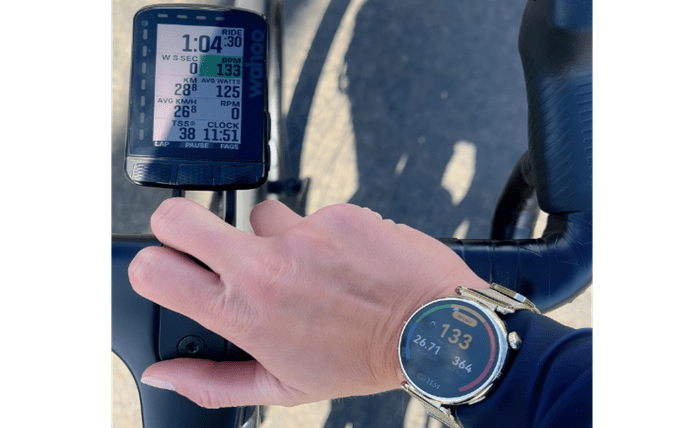
Cyclists and endurance athletes rely heavily on power data to measure performance, structure training sessions, and monitor long-term progress. Traditionally, this kind of precision required a dedicated cycling power meter mounted on the bike. But with recent smartwatch innovations, especially those seen in devices like the HUAWEI WATCH GT 6 series, virtual power estimates are becoming a practical alternative. Many riders now wonder just how accurate virtual power can be in comparison. Understanding how it works sheds light on when you can trust it and where limitations may exist.
How Accurate Is Virtual Power on Today’s Smartwatches?
Virtual power calculations have improved significantly, but they operate differently from hardware power meters. Here’s how this innovative cycling power meter impacts accuracy and when the data is most reliable.
Virtual Power Uses Calculated, Not Measured, Data
Unlike a traditional cycling power meter—which measures mechanical force applied to the crank or pedals—virtual power is calculated using a combination of GPS speed, barometric elevation changes, rider weight, and gradient. The HUAWEI WATCH GT 6 uses this exact method, integrating GPS velocity with barometer readings to estimate power output. Because it does not directly measure applied force, its accuracy depends heavily on signal quality and environmental stability.
Accuracy Improves With High-Quality GPS and Barometer Data
One of the biggest factors influencing virtual power accuracy is GPS stability. The GT 6 and GT 6 Pro have improved multi-band GPS, which enhances speed tracking and gradient detection. This makes virtual power more reliable on open roads or steady climbs where GPS reception is strong. The barometer also plays a crucial role in detecting altitude changes, a key part of power estimation on hilly routes. When both sensors perform well, virtual power can closely match readings from a dedicated meter.
Long-Term Use Increases Precision
An interesting advantage of Huawei’s virtual power system is its ability to improve over time. The more the watch is worn, the more data it collects about the user’s riding style, pacing habits, terrain patterns, and physiological responses. This helps refine its power estimation model. Repeated rides allow the watch to generate increasingly consistent and realistic power values, ideal for tracking improvements or structuring fitness-based training plans.

Environmental Factors Influence Power Variations
Wind resistance, drafting, sudden terrain drops, and rapid acceleration can affect the accuracy of virtual power readings, since they rely on estimated forces. Traditional power meters remain superior in turbulent outdoor conditions because they directly detect changes in applied force. During strong headwinds, for example, virtual power may overestimate effort because speed reduction is interpreted as higher power demand. Conversely, tailwinds may cause underestimation.
Useful for Training Zones, Not Precision Racing Data
For most cyclists, especially those training for fitness, virtual power is accurate enough to determine training zones, monitor progress, and maintain consistent effort. The GT 6’s virtual power output aligns well with steady-state riding efforts, making it ideal for endurance rides, tempo sessions, and structured intervals. While professionals may still require an exact cycling power meter for racing, virtual power is sufficiently accurate for general performance improvement and significantly more affordable.
Seamless Integration Across Multiple Bikes
A major benefit of smartwatch-based virtual power is versatility. Cyclists with multiple bikes can track power without installing several meters. For riders who switch between road, gravel, and indoor training setups, the GT 6 Pro provides reliable continuity across all sessions without additional equipment costs.
Conclusion
Virtual power on smartwatches has become impressively accurate, especially when supported by strong GPS, atmospheric sensors, and thoughtful long-term data calibration. While it won’t replace a cycling power meter for precision racing or highly technical training, it offers a reliable, cost-efficient solution for most cyclists looking to understand their effort and structure their workouts. Devices like the HUAWEI WATCH GT 6 and GT 6 Pro prove that virtual power can be a powerful tool, bringing meaningful performance insights straight to your wrist without extra hardware.
